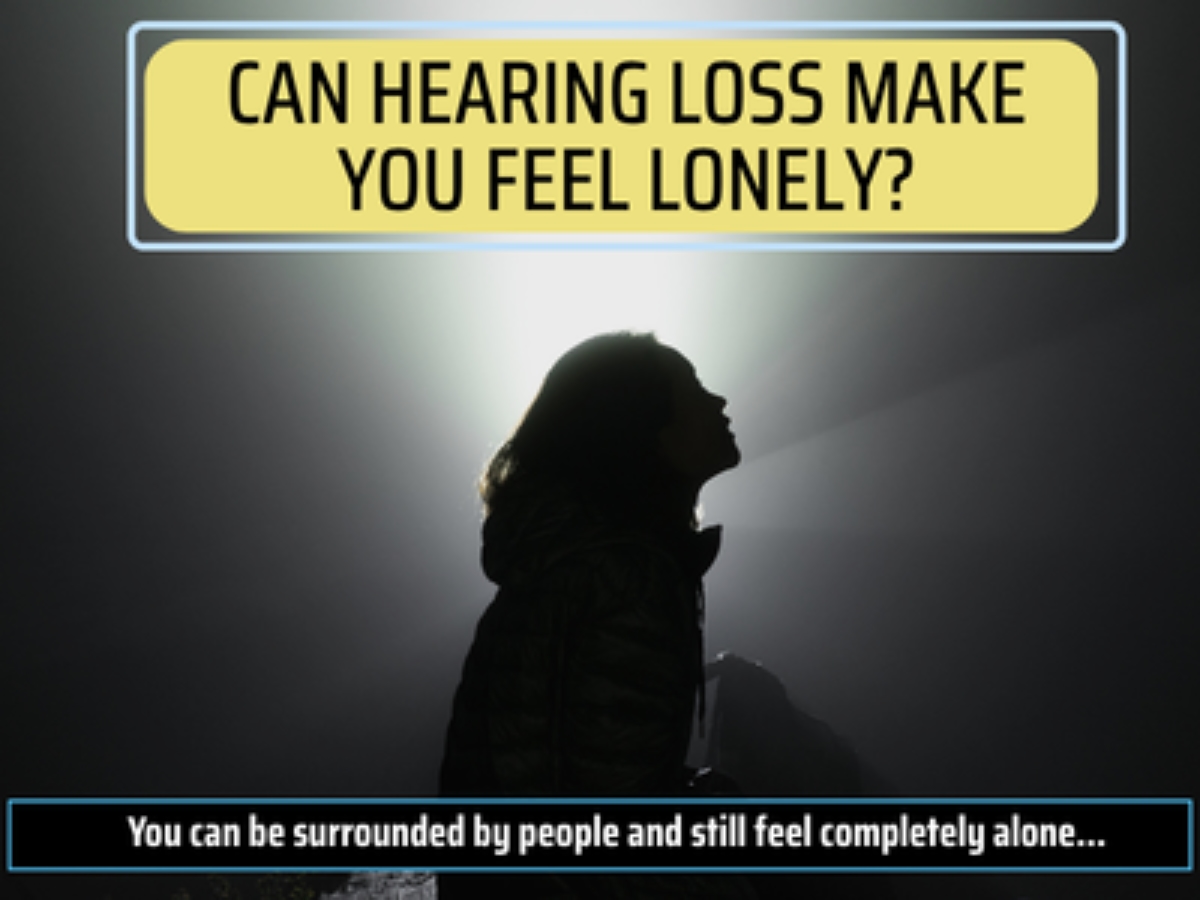

You can be surrounded by people and still feel completely alone…
You’re sitting around the dinner table with family. Everyone is laughing. Someone tells a story. Another person responds. You smile and laugh along—even though you only caught about half of what was said. Or maybe you’ve started skipping restaurants because they're too noisy. You avoid large family gatherings because keeping up with conversations is exhausting. You turn down invitations because it’s easier than repeatedly saying, “What?”
Sound familiar?
It may not simply be a matter of "not hearing well." Hearing loss can affect how connected you feel to the people and world around you.
When Hearing Gets Hard, Connecting Can Get Harder.
The National Institute on Aging notes that people with hearing loss may have difficulty communicating with friends and family. Frustration or embarrassment about not understanding conversations can lead some people to withdraw, resulting in less social interaction, social isolation, and greater feelings of loneliness.
And here's the tricky part:
- Hearing loss doesn't always happen overnight.
- It can creep in gradually.
- First, you miss a few words.
- Then you start asking people to repeat themselves.
- Then the TV gets a little louder.
- Then restaurants become difficult.
- Then group conversations become frustrating.
And eventually, you may find yourself thinking: "I'd rather just stay home." That's when hearing loss becomes much more than just hearing. "I'm Not Lonely… I Just Don't Like Going Out Anymore." This is something worth paying attention to…
When conversations become difficult, people sometimes naturally change their behavior. They may participate less, talk less, attend fewer gatherings, or avoid situations where they know they'll struggle to hear. The National Institute on Aging specifically identifies hearing problems as one factor that can increase the risk of social isolation and loneliness.
And loneliness isn't necessarily about being physically alone.
- You can have family.
- You can have friends.
- You can have people sitting right beside you.
- And still feel disconnected.
That's because loneliness is about feeling separated or disconnected — not simply about how many people are around you.
Hearing Loss Can Affect More Than Conversations.
Research and health organizations have found associations between hearing loss and several aspects of overall well-being.
Hearing loss has been associated with:
- Social isolation and loneliness
- Depressive symptoms
- Anxiety
- Frustration and emotional stress
- Reduced quality of life
- Difficulty participating in everyday activities
- Cognitive health concerns
The National Institute on Deafness and Other Communication Disorders (NIDCD) notes that hearing loss can make participating in everyday conversations more difficult and can contribute to frustration, social isolation, depression, anxiety, and other quality-of-life concerns.
NIDCD also reports that among U.S. adults ages 20–69, about 18% of those with moderate or worse hearing loss have depression, compared with about 8% of adults overall in that age range.
That doesn't mean hearing loss automatically causes depression or anxiety. These conditions can have many causes. But the connection is important enough that your hearing deserves to be part of the conversation about your overall well-being.
What If Hearing Better Helped You Get More Life Back?
This is where doing something about hearing loss can make a meaningful difference. At Mid-America Hearing Center, our goal isn't simply to help you hear the television. It's to help you participate in life.
That might mean:
- Following the conversation at the family dinner table.
- Hearing the punchline instead of laughing because everyone else did.
- Hearing your grandchild's voice more clearly.
- Feeling more comfortable participating in conversations at restaurants.
- Having an easier time talking on the phone.
- Enjoying music again.
- Watching television without constantly reaching for the remote.
- Spending less time saying, "What?"
- Feeling more connected to the people who matter most.
Start With Something Simple: Find Out Where You Stand.
One of the easiest ways to take the first step is with a hearing evaluation.
At Mid-America Hearing Center, we offer FREE hearing exams to help you understand what's happening with your hearing. If hearing technology is appropriate for you, we can discuss personalized hearing solutions based on your hearing needs, lifestyle, preferences, and budget.
And because everyone's experience with hearing aids is different, many hearing aids are available with a 60-day risk-free trial, giving you the opportunity to experience the difference for yourself. We also provide ongoing care, follow-up, testing, adjustments, and support—because getting hearing aids shouldn't be the end of the relationship. It's the beginning of better hearing care.
Better Hearing. More Connection. More Life.
Hearing loss isn't something you should be embarrassed about. And getting your hearing checked doesn't mean you're admitting that you're "old." It means you're paying attention to your quality of life.
- Maybe you've been missing pieces or whole of conversations.
- Maybe you've stopped enjoying crowded restaurants.
- Maybe your family keeps telling you that you need to get your hearing checked.
- Maybe you've become the person who automatically says "What?" before anyone has even finished talking.
- Or maybe you've simply noticed that life doesn't sound quite the way it used to.
Don't wait until avoiding conversations becomes avoiding people…
A FREE hearing exam could be the first step toward hearing more clearly, communicating more easily, and reconnecting with the people and activities you love. Because Better Hearing Isn't Just About Hearing More. It's about being more connected to life. Call Mid-America Hearing Center at (417) 466-7196 today to schedule your FREE hearing exam.
Hear the moments that matter - Hear the people you love - Hear more of life.
Mid-America Hearing Center — helping you turn confusion into clarity, one conversation at a time.